



Understanding Pips in Forex Trading: A Comprehensive Guide
This article will delve deep into the world of Forex trading, focusing on the crucial concept of pips and their importance in trading strategies. Forex, or foreign exchange, is the global marketplace for exchanging national currencies against one another. In this financial arena, pips play a pivotal role in determining price changes in currency pairs. For traders looking to make informed decisions, understanding what a pip is and how it functions is critical. Additionally, for those interested in expanding their trading toolkit, you might find valuable resources in forex trading pip Best Crypto Apps, which can enhance your trading experience.
What is a Pip?
A pip, short for “percentage in point,” is a unit of measurement that expresses the change in value between two currencies in a currency pair. It is typically the smallest price move that can be observed in the exchange rate of a currency. In most currency pairs, a pip is equivalent to a movement of 0.0001. For example, if the EUR/USD moves from 1.1050 to 1.1051, that 0.0001 increase represents a one pip movement.
Understanding the Role of Pips
Pips are significant for several reasons in Forex trading. They allow traders to measure price fluctuations, calculate potential profits and losses, and develop effective trading strategies. Here are some key points about the role of pips:
- Market Movement: Pips provide insight into the volatility of a currency pair. A higher number of pips gained or lost can indicate greater instability, while fewer pips may suggest a more stable market.
- Risk Management: By understanding pip values, traders can implement effective risk management strategies. This includes determining position sizes and setting appropriate stop-loss orders.
- Profit Calculation: Since most Forex brokers allow traders to calculate their profits or losses in relation to pips, knowing how to track pip changes is essential for monitoring trading outcomes.
How to Calculate Pips
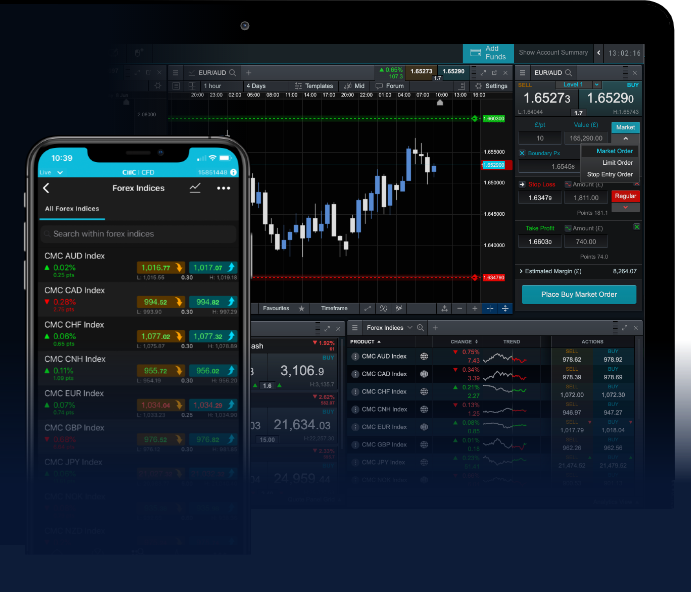
Calculating pips can be straightforward, especially when traders understand the basic formula. For standard currency pairs, the formula is:
Pip Value = (Pip Change / Exchange Rate) x Trade Size
For example, if a trader buys 10,000 units (or 1 mini lot) of the EUR/USD and the price moves by 1 pip, the calculation would be:
Pip Value = (0.0001 / 1.1050) x 10,000
This simplifies to approximately $0.90 per pip.
Different Types of Pips
While pips are the universally accepted measure, there are variations depending on the context:
- Standard Pip: In the majority of currency pairs, a pip refers to a movement of 0.0001.
- Decimal Pip (or Pipette): This refers to a fractional pip movement, for example, a 0.1 pip change, typically noted in pairs with 5 decimal places (e.g., 0.00001).
- Point: Some traders refer to a pip as a point, particularly in the stock market or commodities trading.
Why Traders Should Pay Attention to Pips
Pips are not merely a technicality but a fundamental aspect of Forex trading. Here are reasons why traders should pay close attention:

- Understanding Market Trends: Analyzing pip movements helps traders identify market trends and reversals, aiding in strategic decision-making.
- Establishing Risk Tolerance: Traders use pip calculations to assess their risk tolerance and adjust their trading strategies accordingly.
- Maximizing Profits: The more knowledgeable a trader is about how pips work, the better equipped they are to maximize their profits.
Using Pips in Trading Strategies
In Forex, leveraging pips effectively involves a solid understanding of various trading strategies. Here are key strategies where pips are at the forefront:
1. Scalping
Scalping is a trading style that involves making numerous trades throughout the day to capitalize on small price movements. Since the focus is on earning several pips per trade, understanding pip values is essential for scalpers.
2. Day Trading
Day traders open and close positions within the same trading day, often targeting pip gains from intraday price swings. Knowing how to manage pip values can significantly influence their success.
3. Swing Trading
Swing traders seek to capture larger price movements over several days or weeks. By focusing on the number of pips gained, they can determine the viability of their trades and adjust strategies based on market conditions.
Conclusion
Pips are a cornerstone of Forex trading, playing a critical role in how traders analyze the market, manage risk, and pursue profit. Gaining a firm understanding of pips—what they are, how they work, and their implications on trading outcomes—can elevate a trader’s capabilities. In the fast-paced world of Forex, being informed is key, and trading with an awareness of pip dynamics can enhance strategies significantly. As you continue to expand your knowledge in Forex trading and related technologies, consider looking into innovative solutions such as the Best Crypto Apps to further complement your trading approach.